MONDAY JOE™ SERIES 4/27/2026: A $2.5 Billion Political Tsunami Is About to Hit Your CTV Plan — Here's What Smart Brands Are Doing Now
Every two years, the political class shows up to your media plan uninvited.
In 2026, they're bringing $2.5 billion.
And they're spending almost all of it on the exact same inventory you buy every day.
This is not a story about politics.
This is a story about what happens to your CPMs, your delivery pacing, and your brand-safety exposure between Labor Day and Election Day.
If you're a DTC brand running CTV in the second half of 2026, this is the post you needed three months ago.
The Number That Should Stop You
$2.5 billion in political CTV spend.
That's AdImpact's projection for the 2026 midterm cycle.
For context:
$260 million in 2020.
$1.5 billion in 2024.
$2.5 billion in 2026.
A 600% increase in six years.
CTV is the only media category growing in 2026.
Broadcast is flat.
Cable is shrinking.
Digital display is down.
CTV is up 20% over 2024 levels — and 24% of every political ad dollar in this cycle is going to streaming.
That money has to land somewhere.
Spoiler: it's landing on your inventory.
Where the Money Cannot Go
Here's the part nobody is talking about.
Netflix does not accept political ads.
Amazon Prime Video does not accept political ads.
Together, those two platforms represent roughly 280 million U.S. ad-supported viewers.
All of them — closed to political dollars.
Which means $2.5 billion is concentrating on the platforms that do accept political:
Hulu
Roku
YouTube
Tubi
Pluto TV
Peacock
Paramount+
The Roku Channel
If you're a DTC brand running CTV, look at that list.
It's the same list you buy from every week.
Same shows. Same households. Same auctions.
Now imagine $2.5 billion in additional demand poured into that auction over an 8-week window.
That's what's coming.
The Battleground States Are Going to Burn
Political money does not spread evenly.
It concentrates in races.
For 2026, the races that matter:
Senate: Texas, Georgia, Maine, Michigan, North Carolina, New Hampshire, Ohio, Iowa, Alaska
Governor: California, Michigan, Georgia
Special elections: Florida (Rubio's seat) and Ohio (Vance's seat)
In those DMAs, expect CTV CPM inflation of 20% to 40% during the September-through-November window.
Texas alone has already drawn $79.4 million in Senate primary spending through February — and the general election hasn't started.
Georgia has seen $26.1 million.
California's open governor's race: $20.5 million and climbing.
Michigan: nearly $1 billion in projected total ad spend across the cycle.
If your brand has heavy CTV concentration in any of those states, you have a problem.
If you don't have a plan for those markets right now, you have a bigger one.
Republican vs. Democrat — Why Both Sides Hurt You
Here's a misconception worth correcting.
Some brands assume one party will dominate the airwaves and the other will go quiet.
That's not what's happening.
Republicans currently hold ~$850 million in cash on hand across the RNC, NRSC, NRCC, Congressional Leadership Fund, Senate Leadership Fund, and MAGA Inc.
Democrats are getting outpaced at the committee level — but their candidates are out-raising Republicans in seven of the most competitive Senate seats.
Texas Democrat James Talarico raised $27 million in Q1 2026 alone.
Georgia's Jon Ossoff raised $14 million in the same quarter.
Translation:
Republican money flows through outside groups and super PACs.
Democratic money flows through candidate committees.
Two different vehicles.
Same inventory.
Same auctions.
Same pressure on your CPMs.
This is not a one-sided wave. It's a two-sided flood.
What Happens to Your Campaign
Let's get specific.
If you're running CTV between September 1 and November 3, 2026, expect five things:
1. Your CPMs spike.
Premium inventory in battleground DMAs will inflate 20%–40%. National CPMs will inflate 10%–15%. Open RTB will inflate the most because political buyers are price-insensitive — they will outbid you.
2. Your delivery pacing breaks.
If you're pacing $80,000 a month on Hulu, expect partial delivery during peak weeks. Your DSP will tell you the inventory is "available." It will be — at a CPM you wouldn't agree to.
3. Your reach plateaus.
You'll spend more to reach the same people. Frequency caps that worked in July will deliver less unique reach in October.
4. Your brand safety exposure goes up.
AI-generated deepfake political ads are already running — the NRSC released one in March of a Texas Senate candidate that fooled most viewers. Every CTV publisher is going to be making rapid moderation calls under pressure. Your ad may end up adjacent to content you didn't expect.
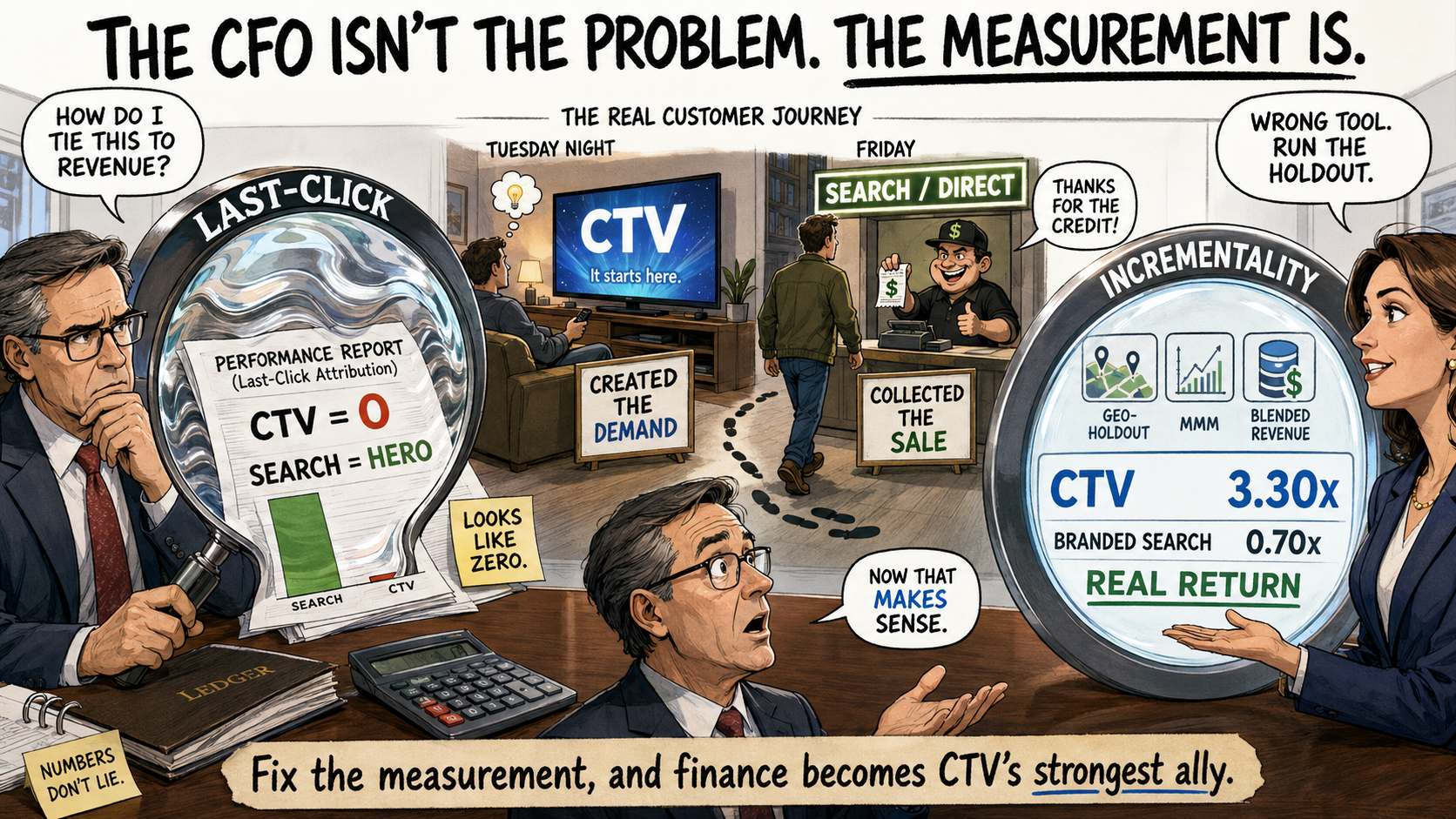
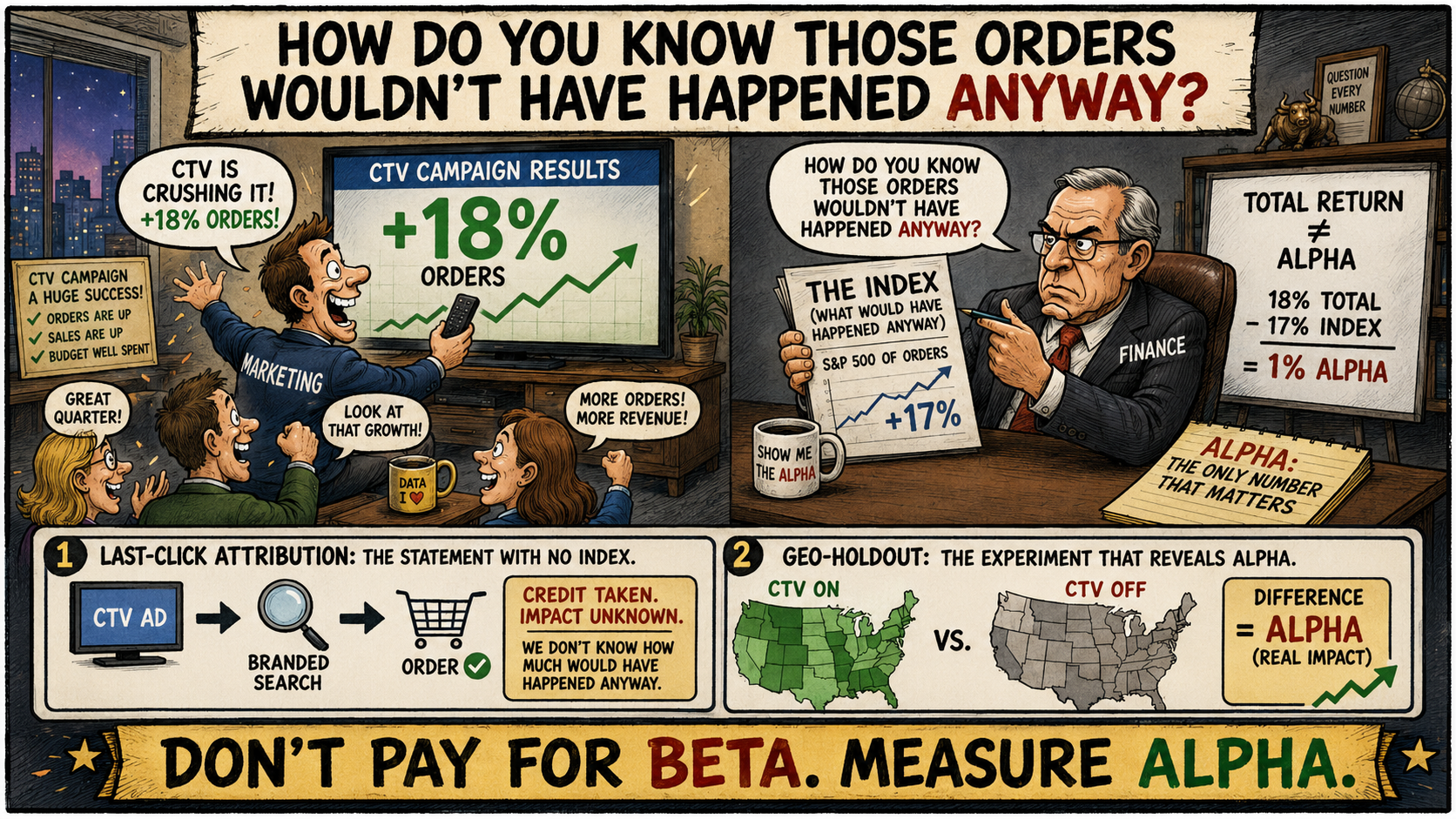
5. Your incrementality reads get noisier.
If you run geo-holdout testing, the 8-week political window will contaminate baseline market behavior. Test reads from September and October cannot be trusted in battleground DMAs without aggressive controls.
What Smart Brands Are Doing Right Now
Five moves. None of them require waiting.
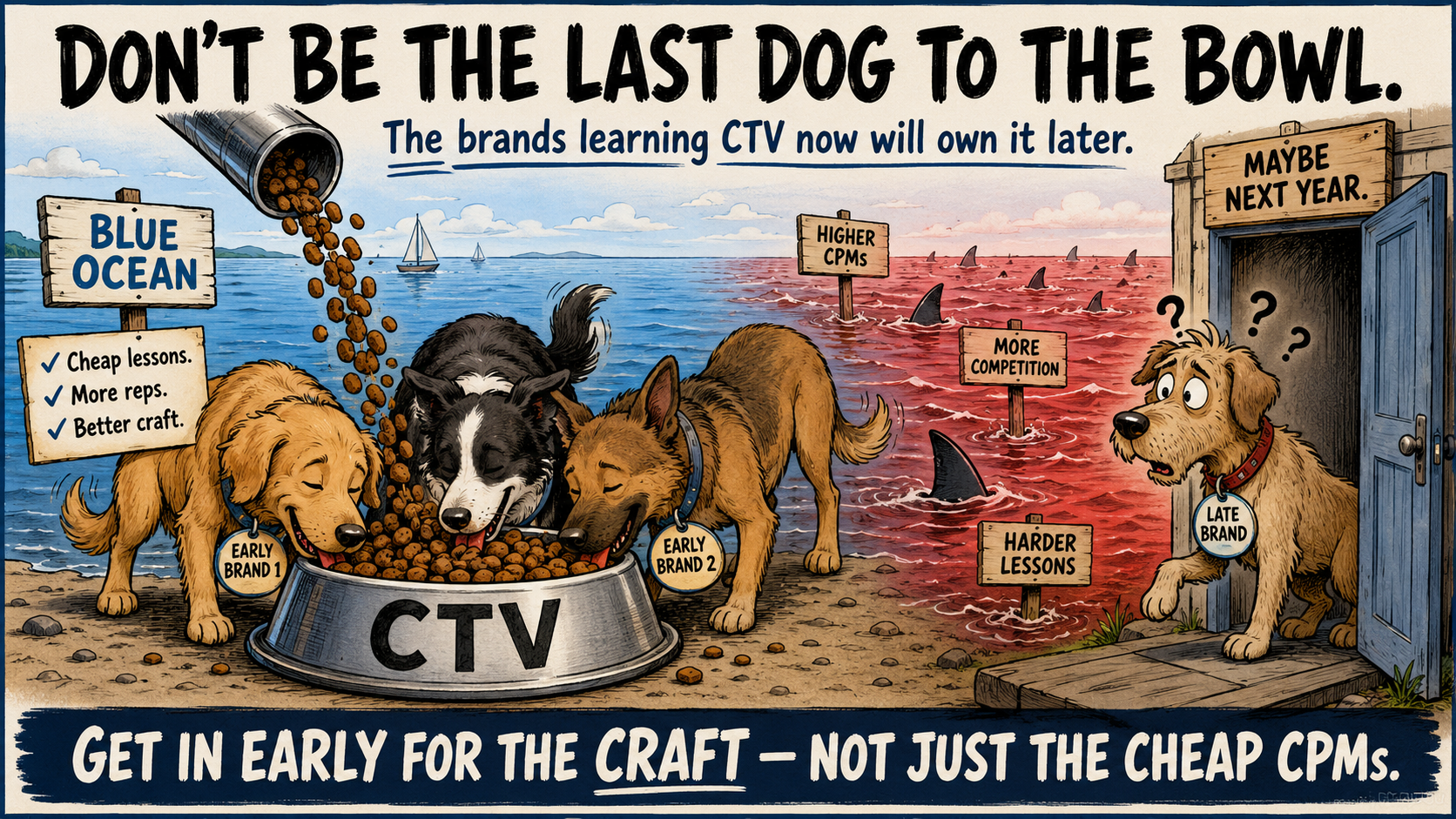
Move 1: Lock in inventory before Memorial Day.
Direct deals with publishers, signed now, at fixed CPMs, are immune to the auction inflation that's coming. Vibe.co, Tatari, and direct upfronts with Disney/Hulu, Peacock, and Paramount+ all support this. The brands locking in May commitments will be the only ones with stable CPMs in October.
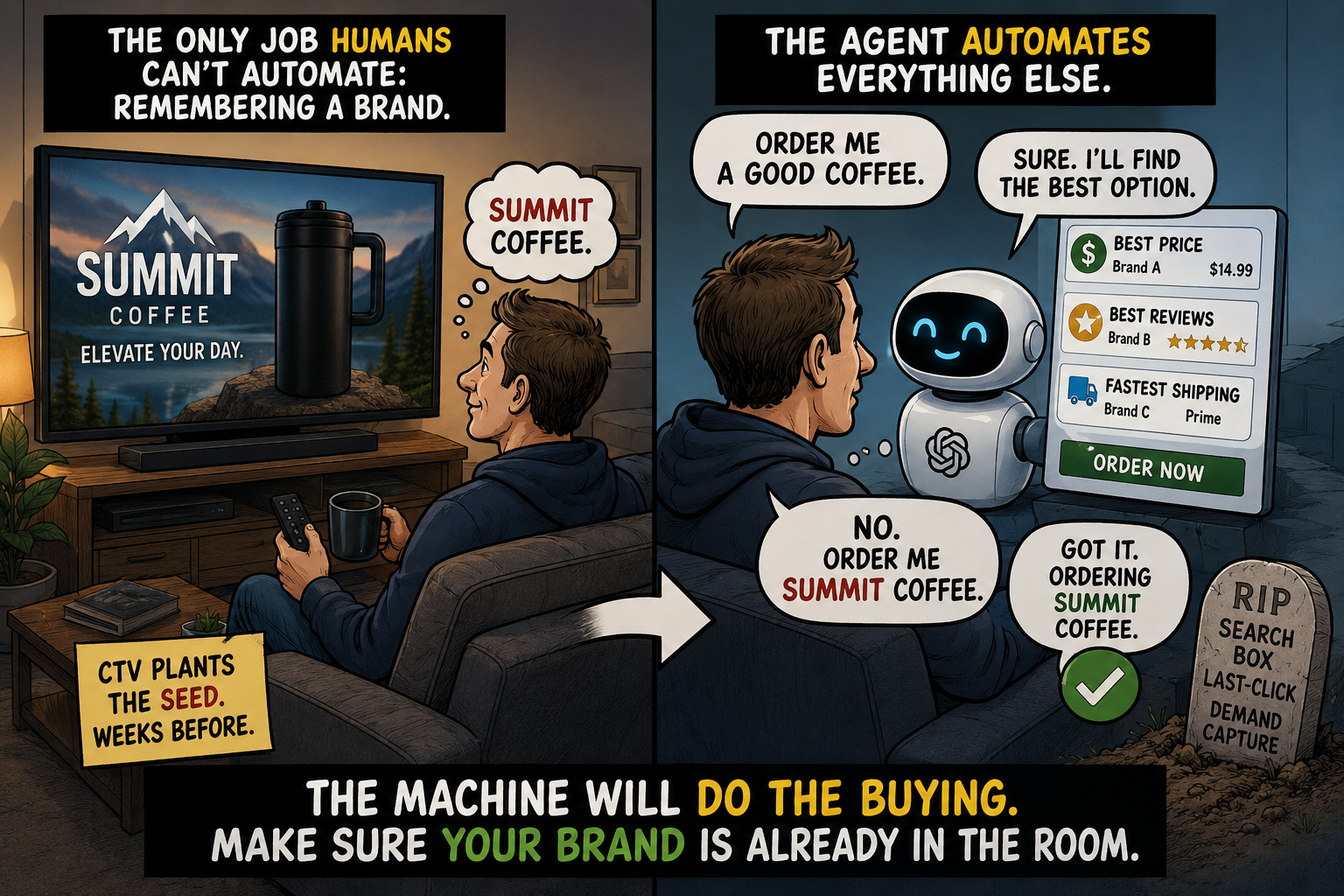
Move 2: Re-allocate a portion of CTV spend to the political-free platforms.
Netflix and Amazon Prime Video are about to become the cleanest, least-competitive premium CTV inventory in America for an 8-week window. If you're not testing those platforms now to be ready in September, you're missing the only structural arbitrage in the market.
Move 3: Tighten your geo strategy.
If your brand isn't selling political messaging, stop bidding into battleground DMAs at peak CPMs. Re-weight to non-battleground states from September through Election Day. Then re-weight back in November.
Move 4: Pre-run your incrementality tests now.
Every test you want to read on CTV in 2026 should be in-market before Labor Day or after Thanksgiving. The 12-week window in between will produce dirty data. Plan around it.
Move 5: Update your brand safety stack.
Add political-content exclusions across every DSP and SSP you operate on. Layer in IAS or DoubleVerify for adjacency monitoring. Pre-build a creative rotation strategy in case a deepfake or controversial political ad goes viral on a platform you're running on.
The Strategic Opportunity Most Brands Will Miss
Here's what we keep telling clients.
Political cycles don't just inflate prices.
They reshuffle the deck.
The brands that adjust now — the ones that lock in inventory, redistribute geo budgets, and pre-test their measurement — will run a smoother Q4 than they've ever had.
The brands that treat October like any other October will pay tuition.
Some of them will pay enough tuition that they conclude "CTV doesn't work" and pull back in 2027.
That conclusion will be wrong.
But by the time they figure it out, the brands that planned for 2026 will be a year ahead.
Final Take
$2.5 billion in political money.
Six platforms absorbing all of it.
Eight weeks of CPM pressure.
One election that decides whether your Q4 is the best you've ever had — or the most expensive.
You can't stop the wave.
But you can stop being surprised by it.
The agencies and brands that plan for political tsunamis don't survive them.
They use them.
Plan accordingly.