"Chat Is Dead." The Search Box Is Next. And That's the Best News Brand Advertising Has Had in a Decade.
The most important advertising story this week never mentioned advertising.
OpenAI is tearing ChatGPT down to the studs. The reporting says the company is rebuilding it into a "superapp" — pushing past the chat box toward AI agents that do things instead of just answering things. Coding tools. Image generation. Partner apps that book your travel, manage your calendar, summarize your week.
One executive described the goal as an assistant for everything in your life.
Another said the quiet part out loud. When the AI is good enough, there will not be a large number of distinct brands to talk to. There will be one thing you ask, and it will do whatever you need.
The headlines filed this under tech. Under product. Under the AI arms race with Anthropic.
It is not a tech story. It is the story of what happens to every brand on earth when the customer stops shopping and starts delegating.
And the internal memo, leaked in spirit if not in fact, may as well have read: chat is dead.
If chat is dead, the search box is next.
And if you sell anything to anyone, you need to understand what dies with it — and what suddenly becomes the only thing that matters.
From Answering to Acting
Here is the actual shift, stripped of the jargon.
For three years, ChatGPT answered questions. You asked, it told you, you went and did something with the answer.
The new version does not want to answer. It wants to act. You will not ask it which flight is best. You will tell it to book the flight. You will not ask it which moisturizer has the best reviews. You will tell it to order one.
The chat box was a reference librarian. The agent is a personal assistant with your credit card.
That is a small change in interface and an enormous change in everything downstream of it. Because the moment the customer delegates the task instead of performing it, every step the customer used to take by hand gets automated. The browsing. The comparing. The clicking.
The searching.
Especially the searching.
The Gateway Is About to Be Automated
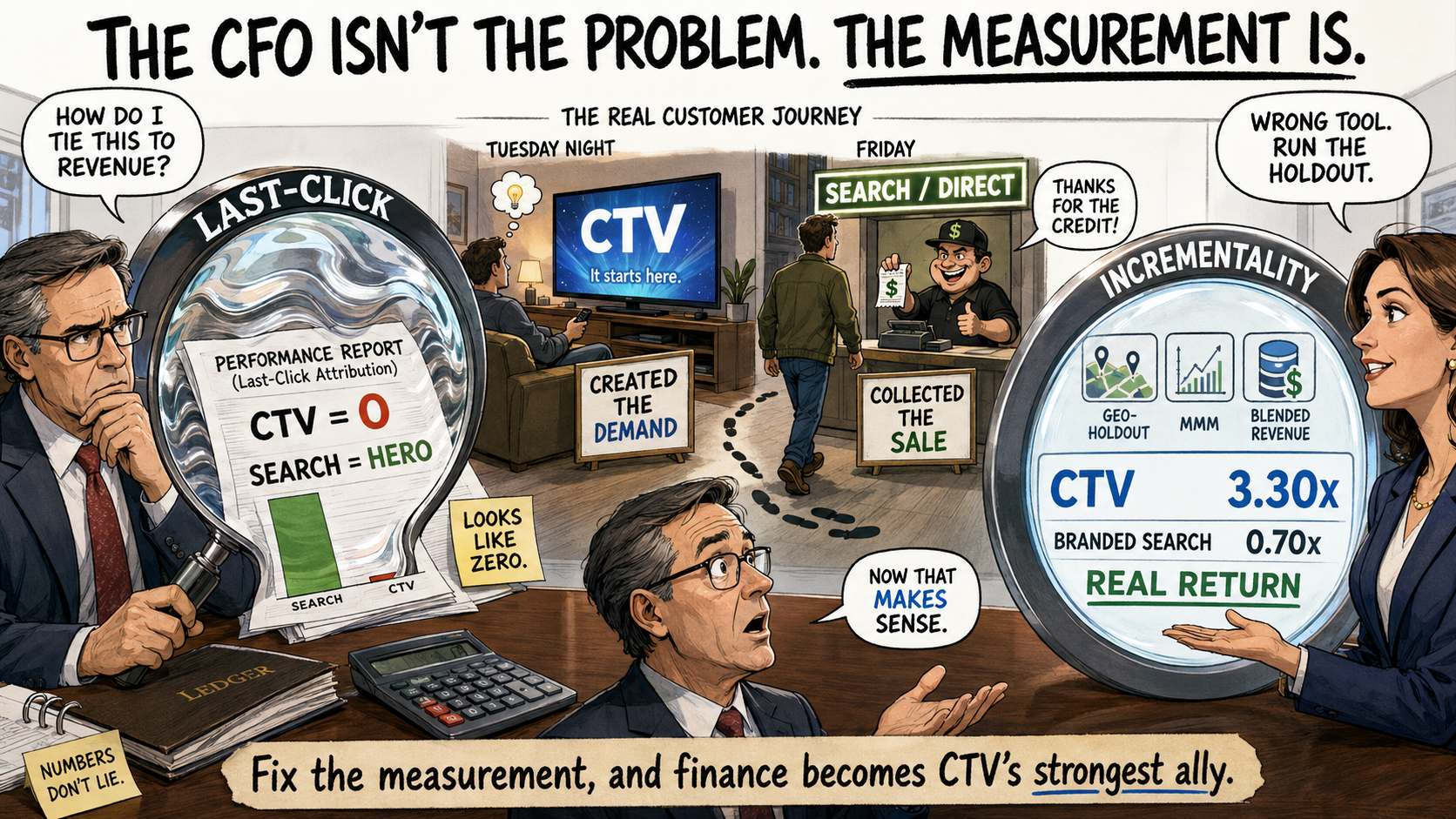
Last week I wrote that branded search and direct traffic are gateways. The cash register, not the salesman. The door the customer walks through to act on demand that something upstream already created.
Now watch what happens to that door.
When a customer types your brand into Google, a human is walking through the gateway. They saw your ad. They remembered your name. They went looking. The search bar was the door, and the customer opened it themselves.
In the agentic world, the customer does not open the door.
The agent does.
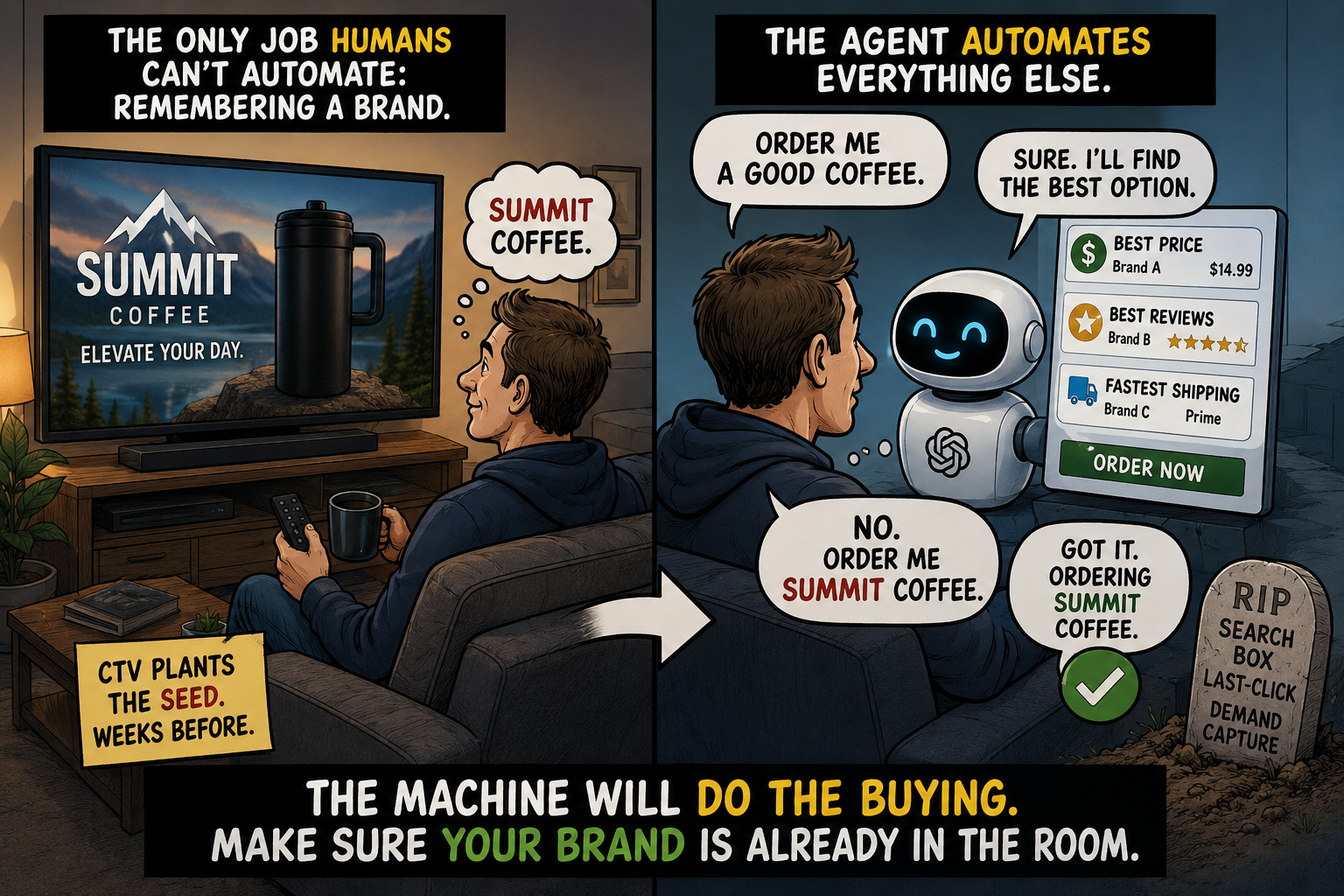
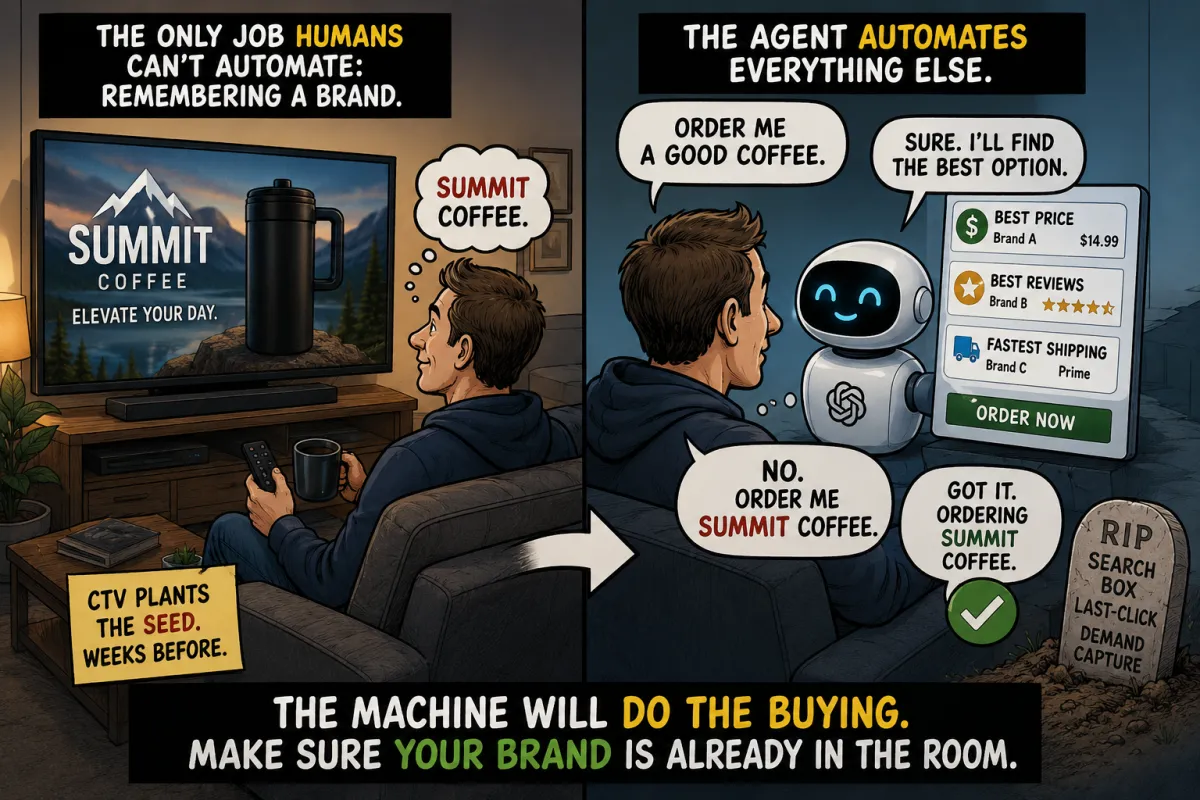
The customer says "order me a good magnesium supplement," and the machine performs the search, reads the results, weighs the options, and completes the purchase. The human never types a brand. The human never sees a results page. The human never touches the gateway at all.
The gateway did not disappear. It got automated. A machine now walks through it on the customer's behalf, faster than any human could, with none of the hesitation a brand could once exploit.
Every dollar of performance marketing built on intercepting a human at that doorway is now spending to intercept a machine that cannot be persuaded by a clever ad, a better position, or a higher bid in the way a person could.
The search box is not dying because search is going away. It is dying because the human is leaving the search box. And the entire performance-marketing industrial complex was built on the human being there.
The Agent Is Brutal to Brands Without Brands
Here is the part that should reorganize every marketing budget in the country.
An AI agent told to find "a good magnesium supplement" does exactly what it was built to do. It optimizes. Best price. Best reviews. Best availability. Fastest shipping. It has no loyalty, no nostalgia, no emotional memory of a commercial that made it laugh on a Tuesday night.
If your product is a commodity, the agent is your executioner. It will line you up against every competitor on price and specifications and pick the winner by math. You cannot out-bid it. You cannot out-clever it. You cannot buy the top of a results page the customer will never see.
There is exactly one instruction that breaks the agent's optimization.
The customer naming you.
"Order me magnesium" is a death sentence for brands without brand equity. "Order me the [your brand] magnesium" is a moat. The first lets the machine choose. The second tells the machine the choice was already made.
The difference between those two instructions is whether your brand is sitting in the customer's head before they ever open their mouth to the assistant.
That is not a search problem. Search happens after the customer speaks. This is a problem of what is already in the customer's head before they speak at all.
And there is only one kind of media that puts a brand in a customer's head before they go looking for anything.
The Thing That Survives
When the agent automates the bottom of the funnel — the searching, the comparing, the buying — it does not automate the top.
It cannot.
The agent cannot make a customer want something. It can only fulfill a want the customer already arrived with. It is the most efficient demand-capture machine ever built and it is completely, structurally incapable of demand creation. It has no power to plant a preference. It can only execute one.
So the preference has to be planted somewhere else, before the customer ever talks to the machine.
Planted in a living room. On a couch. On the largest screen in the house, in a lean-back moment of full attention, by an ad that is not trying to be clicked because it knows it cannot be — an ad whose entire job is to be remembered.
That is CTV. That is brand media. That is the high-attention, emotional, unskippable impression whose only purpose is to lodge a name in a human mind so that weeks later, when that human turns to their AI assistant and says "order me one," the name that comes out of their mouth is yours.
In the agentic era, demand capture gets automated into oblivion. Demand creation becomes the entire game.
And demand creation has a home. It always has. It is the screen the agent cannot reach, delivering the one thing the agent cannot manufacture — a reason to want a specific brand before the shopping ever starts.
Why Performance Marketers Should Be Nervous and Brand Builders Should Be Thrilled
For a decade, the performance crowd won the argument. Measurable. Trackable. Attributable down to the click. Brand was the soft stuff, the unaccountable stuff, the budget you cut first when the quarter got tight.
The agent inverts that hierarchy overnight.
The performance tactics that looked so accountable were mostly demand capture — intercepting humans at the moment they went looking. When the human stops going looking, when the machine does the looking instead, those tactics intercept a buyer who cannot be swayed. The trackable click becomes a click on autopilot. The attributable conversion becomes a conversion the agent was always going to make on price and reviews, with or without the ad.
The brand budget — the unaccountable, soft, first-to-be-cut budget — becomes the only spend that touches the one decision the agent cannot make for itself. Which brand the human names.
The marketers who spent the last decade harvesting demand are about to watch the harvest get automated. The marketers who spent it creating demand are about to find out they were building the only asset that survives.
When the machine does the shopping, the brand already in the customer's head is the whole ballgame. Everything else is just the machine doing math.
The Honest Caveat
None of this is here yet at full scale.
The agentic overhaul is reported, not shipped. Most customers still type their own searches, still see their own results pages, still walk through the gateway with their own hands. The human is still in the search box today.
But the direction is not ambiguous, and the people building it are not hiding it. The most valuable AI company on earth just decided that answering questions is the past and acting on them is the future, and pointed its entire roadmap at the moment the customer stops doing the work themselves.
You do not wait for the wave to arrive to start swimming toward it. You read the direction and you position before it lands. The brands that start building memory now — while the gateway is still human, while there is still time to plant a preference the cheap way — will be the names that come out of customers' mouths when the machine is finally the one listening.
The brands that wait will be commodities in a price-sorted list, read by a machine that has never heard of them and has no reason to care.
The Final Take
Chat is dead. The agent is here. The search box has a clock on it.
And every brand that built its growth on catching a human at the doorway of a purchase is about to discover the human is not coming to the doorway anymore. They sent a machine instead. The machine cannot be charmed, cannot be out-positioned, cannot be made to want.
It can only be told.
So the entire war moves to a single question. When your customer turns to the most powerful assistant ever built and says "order me one," whose name do they say?
That answer is not decided in the search bar. It is not decided at the gateway. It is decided weeks earlier, on the biggest screen in the house, by the only kind of advertising that was ever in the business of making someone remember.
The machine will do the buying.
Make sure your brand is already in the room before it starts.
Cory Poccia CEO, CS & Co. Marketing Studio™