The Red Ocean Is Bleeding: Why Supplement Brands Drowning in Meta Are Losing to the Ones Who Moved to CTV
There's a stretch of water every supplement brand knows by heart.
It's called Meta, and it used to be the promised land. Cheap reach, clean attribution, a click you could trace from ad to checkout. For a decade, you built a DTC supplement brand by pouring money into that water and watching customers come out the other side.
That water is red now. And it's getting redder every quarter.
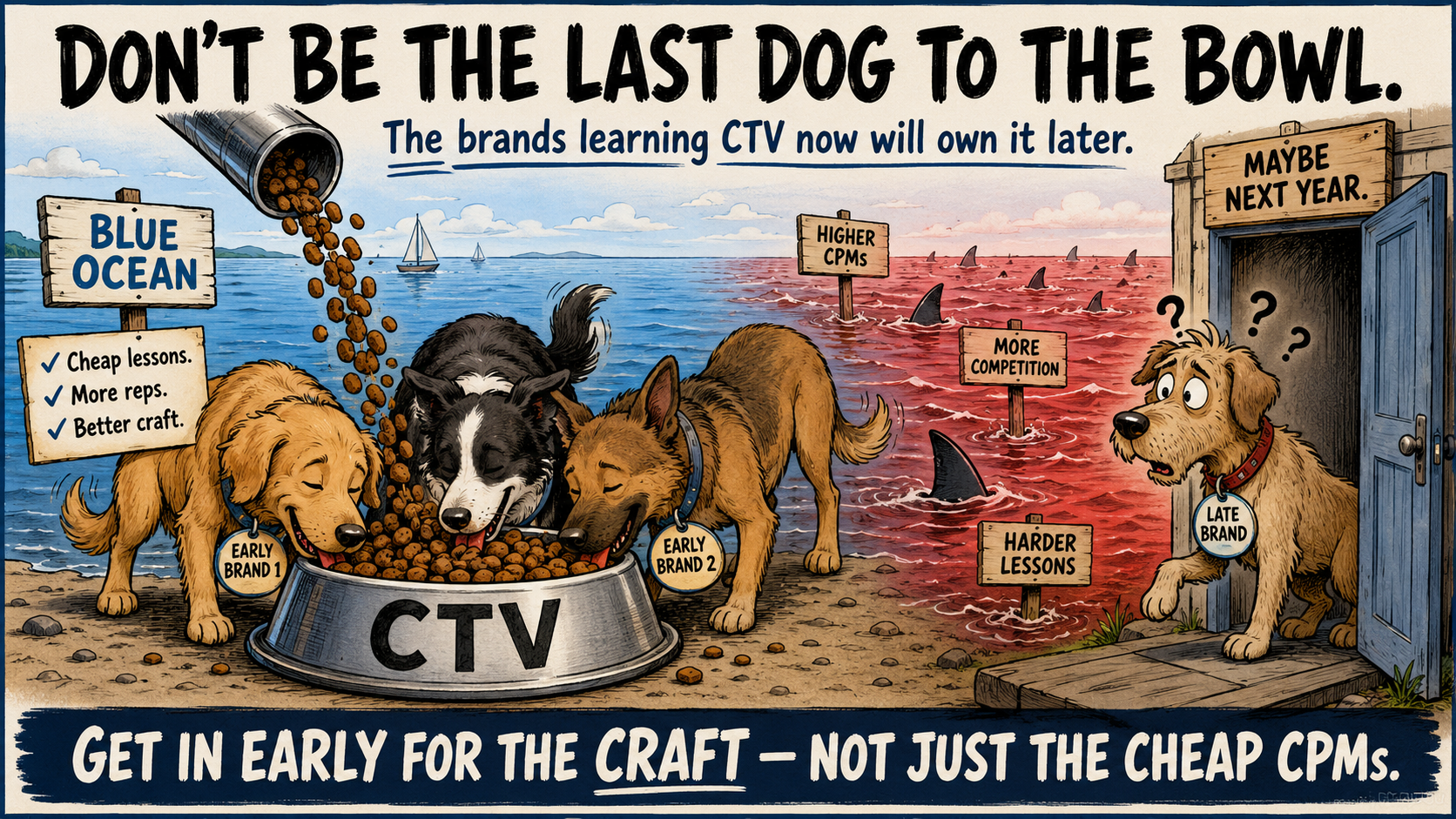
The brands that noticed early — that looked up from the feed and saw the whole category thrashing in the same shrinking pool — did something about it. They found the blue ocean. It's called Connected TV, and while everyone else was bidding each other into oblivion on Meta, the brands that moved to CTV early and measured it correctly quietly pulled ahead.
This is the story of why the red ocean is bleeding, where the blue one is, and what separates the supplement brands winning right now from the ones drowning.
Let's get into it.
The Red Ocean, By the Numbers
Start with the water everyone's still fighting in, because the numbers are worse than most brands admit out loud.
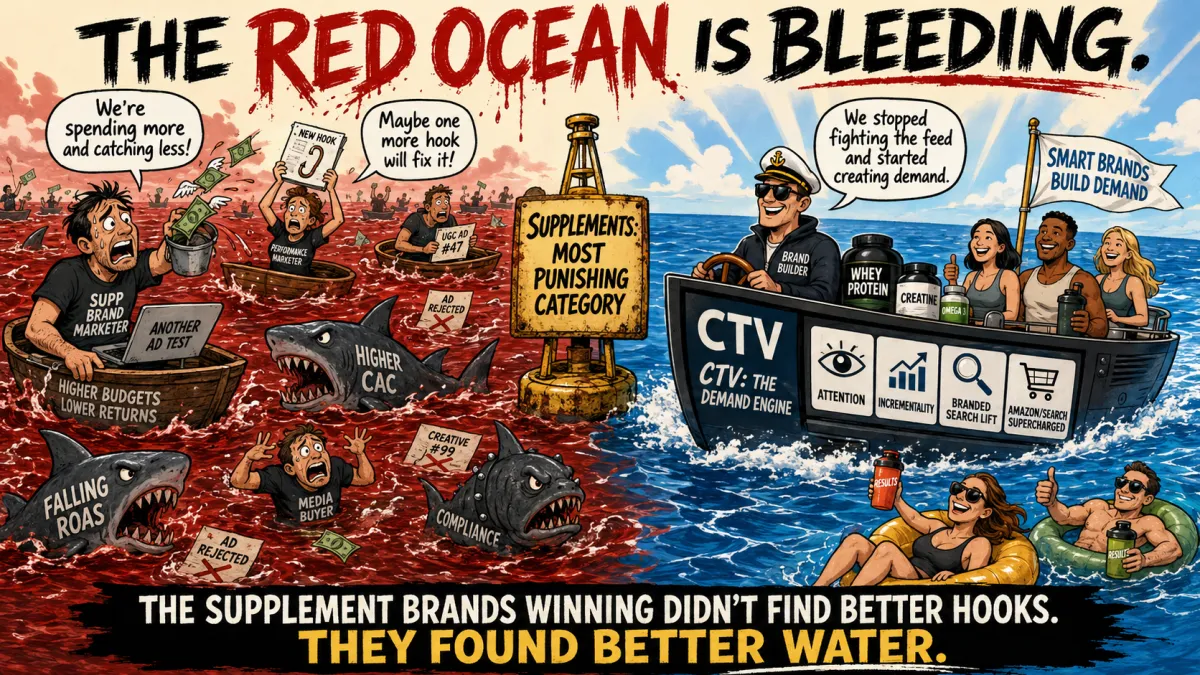
Supplements are the single most punishing category on Meta right now. Health and Wellness CPMs rose 24.7 percent year over year — the steepest increase of any category on the platform. Not "one of the steepest." The steepest. While the rest of the market absorbed rising costs, supplements got hit hardest of all.
It gets worse at the bottom of the funnel — and it's the direction that should scare you, not just the level. The cost to acquire a customer in Health and Wellness rose 12.64 percent year over year, the sharpest cost-per-acquisition increase of any industry on the platform. Not tied for the worst. The worst. And that's on top of a broader DTC reality: customer acquisition costs across the industry climbed 40 to 60 percent between 2023 and 2025 — the steepest short-term rise ever recorded — with 88 percent of subscription brands, the exact model most supplement companies run on, reporting higher acquisition costs.
So a supplement brand isn't just paying a lot to acquire a customer on Meta. It's paying more every single year, faster than any other category, on a curve that's still bending the wrong way — before a single dollar of the compliance overhead, creative rejection, and legal review that supplements uniquely carry.
And the return is sliding out from under everyone. Health and Wellness ROAS fell 15.6 percent year over year — again, the steepest decline of any category. Costs up the most. Returns down the most. That is not a rough patch. That is a structural squeeze, and it is specific to this category.
Read those three numbers together. Highest CPM inflation. Sharpest cost-per-acquisition increase. Steepest ROAS decline. Same category, same platform, worst in class on every axis that matters. That is the definition of a red ocean — a shrinking pool of profitability with too many brands fighting over it, each one bidding the others' margins away. The water isn't just crowded. It's bleeding.
And the hardest part to swallow is that working harder inside that ocean doesn't fix it. You can produce more creative, test more hooks, refresh faster — and the structural math still grinds you down, because the problem isn't your execution. The problem is the water.
The Blue Ocean Is on the Big Screen
Now look at the water almost nobody in supplements was fighting in until recently.
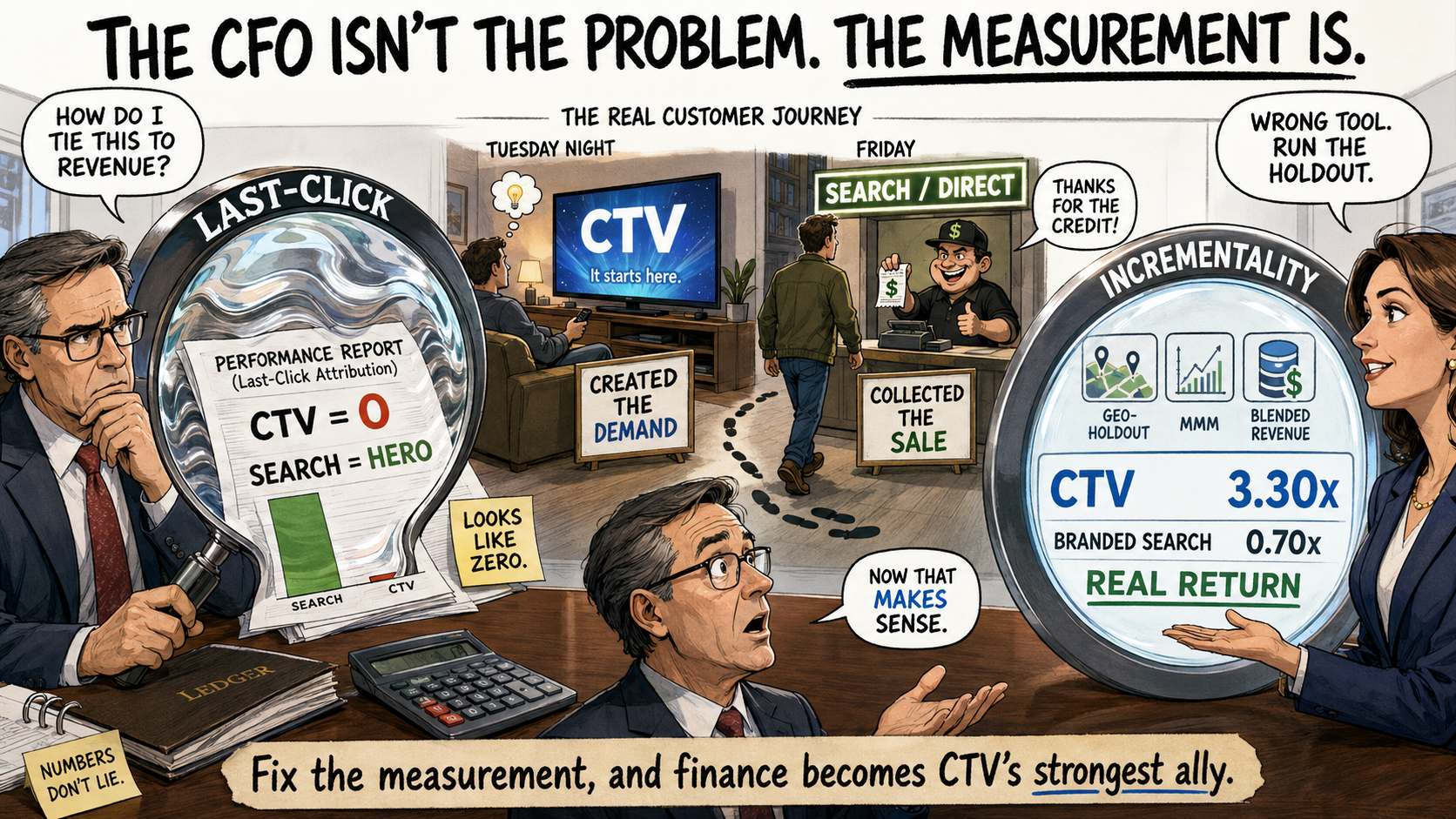
Connected TV is the blue ocean — uncontested space, premium attention, and a return profile that makes the Meta numbers look like a slow-motion accident. Stella's 2025 incrementality benchmarks measured the true, causal return of every major channel, and CTV delivered a median incremental ROAS of 3.30x — the highest of any channel measured. Above Meta at 2.92x. Above Google at 2.98x.
Sit with that comparison for a second, because it inverts the entire conventional wisdom. The channel supplement brands have poured a decade of budget into returns less, on a true incremental basis, than the channel most of them still treat as experimental. The "safe" choice is underperforming the "risky" one, and it's not close.
Why does CTV win where Meta is drowning? Because it's a different kind of water entirely. On Meta, every supplement brand is fishing the same feed, at the same time, against the same competitors, under the same compliance restrictions — and the auction prices that competition straight into your CPM. On CTV, you're on the biggest screen in the house, in a lean-back, full-attention environment, in front of an audience that hasn't been carpet-bombed by fourteen other joint-health ads that morning. The attention is real. The competition is thinner. The water is open.
And the category's smartest players have already figured this out. The leading supplement brands — the ones growing fastest, the ones you'd name if asked who's winning — have been shifting real money onto streaming and big-screen media, precisely because they can see the same math you just read. They didn't move to CTV because it was trendy. They moved because the red ocean stopped paying and the blue one started.
The brands winning in supplements right now are not the ones working hardest inside Meta. They're the ones who left early, planted their flag on the big screen, and measured it correctly on the way.
The Trap That Keeps Brands in the Red Ocean
So if the blue ocean is right there, and the returns are better, why is most of the category still thrashing in the red one?
Because of one measurement mistake that makes CTV look like it isn't working when it's working best.
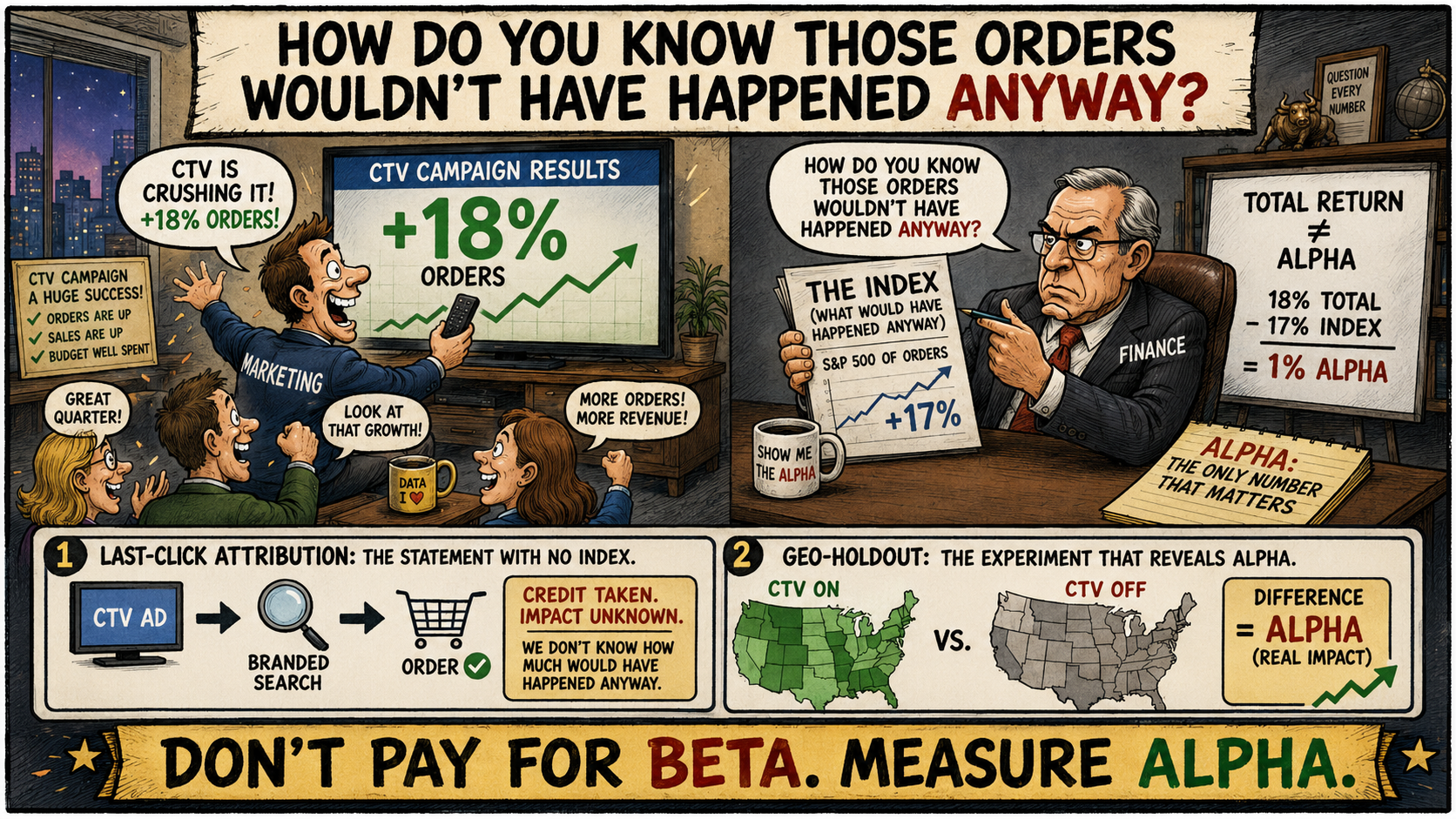
Here's the trap. You cannot click a television. So when a supplement brand runs CTV and then checks its last-click dashboard, CTV appears to have done almost nothing — because the conversion didn't happen on the TV. It happened three days later, when the viewer picked up their phone, searched the brand, and bought. Last-click hands that sale to search. CTV gets a goose egg. And the brand concludes the blue ocean is a mirage and wades back into the red one.
That conclusion is wrong, and there's rigorous data proving exactly how wrong.
Keynes Digital ran a conversion-lift study for a premium health supplement brand — an 80/20 randomized test-and-control split of the audience — to isolate what CTV actually did to the rest of the funnel. The finding: a user who was exposed to a CTV ad and then arrived via paid search was 4.4x more likely to purchase than a user who came through paid search alone.
Read that again, because it dismantles the whole "CTV doesn't convert" objection. The same paid-search click was more than four times as valuable when CTV had touched the customer first. CTV wasn't competing with search. It was supercharging it. The demand CTV created is what made the search click convert.
That is the entire misunderstanding in one statistic. CTV is not a silo you judge in isolation. It's a demand engine. It creates the intent, and then the gateways — branded search, Amazon, direct-to-site — capture it. When you measure CTV by the last click, you credit the gateway and starve the engine. Do that long enough and you defund the exact channel that was making all your other channels work.
CTV Is Not a Silo. It's the Engine.
This is the mental model that separates the brands winning from the brands drowning, so let's make it explicit.
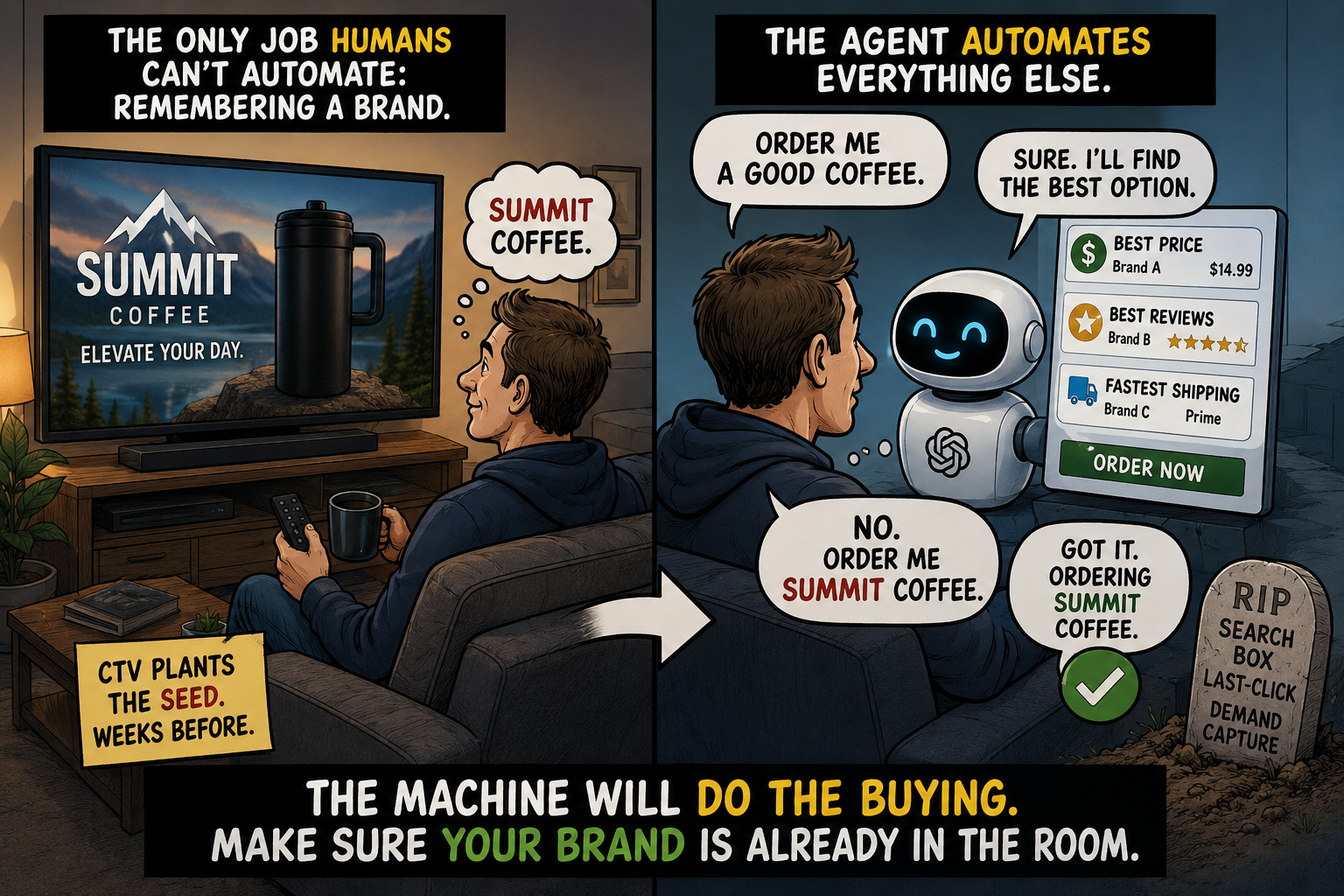
A supplement customer's journey almost never ends on the channel where it started. They see your ad on the big screen and feel the pull. Days later they search your name, or type your URL, or find you on Amazon, and they buy. The purchase shows up as "paid search" or "direct" or "Amazon." But the wanting — the thing that started the whole chain — was manufactured on CTV.
So the channels look like competitors on a last-click report, and they're actually a relay. CTV runs the first leg — it creates the demand. Search, Amazon, and direct run the anchor leg — they capture it and close it. Judging CTV by the conversions that land on the other channels is like giving the anchor runner credit for the whole race and wondering why your lead-off leg looks slow.
The Keynes data makes it concrete. CTV-exposed users converting through paid search at 4.4x the rate of search-only users is not two channels competing. It's the engine feeding the gateway. And the brands that understand this stop asking "should I fund CTV or search?" and start asking "how much more search demand could I create if I fed the engine harder?"
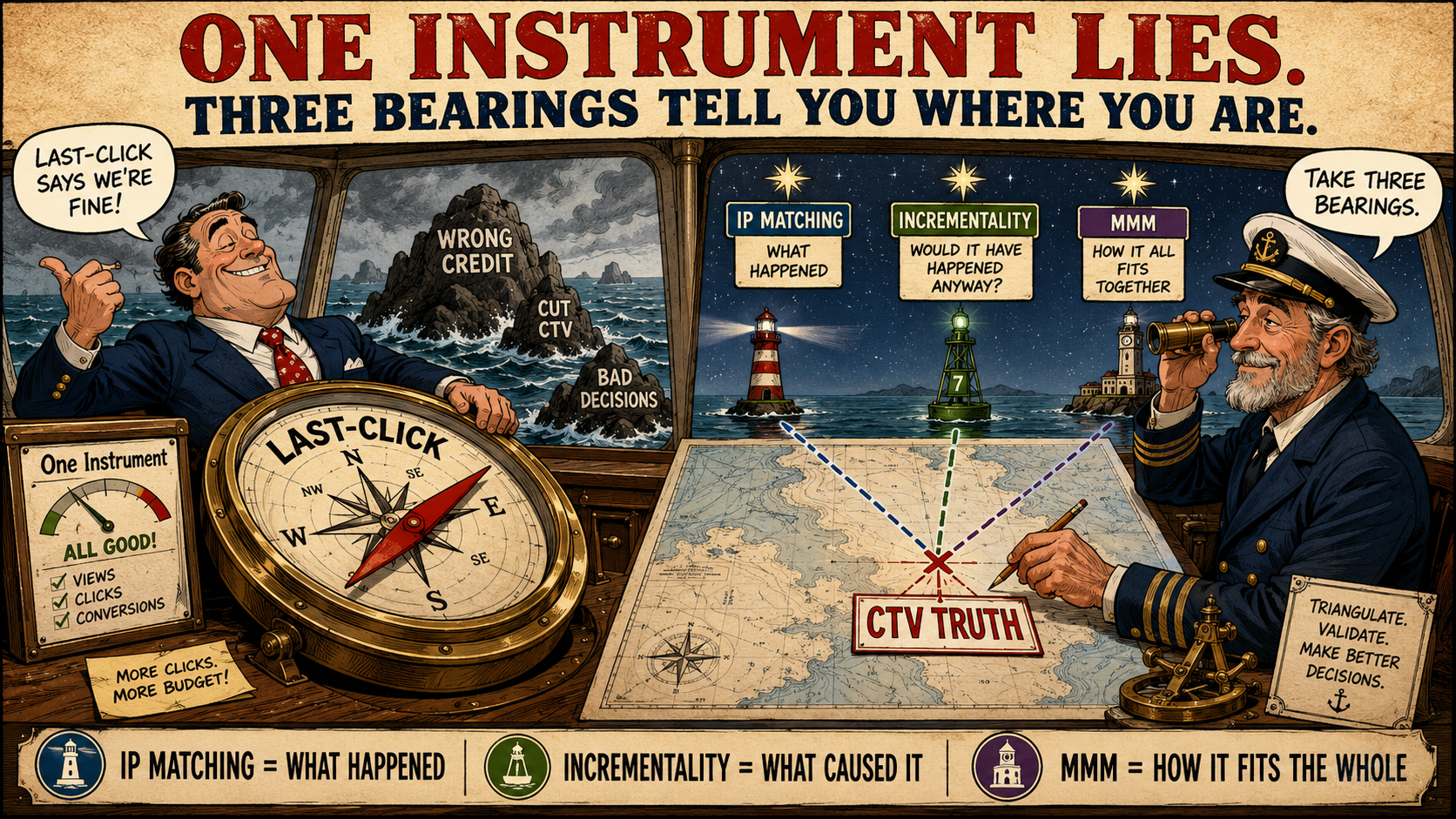
That's the whole game. The winning supplement brands treat CTV as the thing that fills the top of every other channel's funnel — and they measure it that way, with incrementality and holdouts and cross-channel lift, not with a last-click dashboard that was built for a clickable world CTV doesn't live in.
What This Means for a Supplement Brand Right Now
Strip it down to a decision.
If you're a supplement brand and your entire acquisition engine still runs through Meta, you are fishing in the reddest water in all of DTC — highest cost inflation, fastest-rising cost per customer, steepest return decline in the category — and no amount of creative velocity changes the structural math. You are working harder every quarter to stay in the same place, and the place is sinking.
The blue ocean is open. CTV returns more on a true incremental basis than the channel you're pouring your budget into, and it does it by creating demand that lifts every other channel you run — including the search and Amazon spend you're already paying for. The brands beating you in the category didn't find a better hook. They found better water.
But — and this is the part that separates the winners from the ones who try CTV, misread it, and quit — you have to measure it correctly. You cannot judge a demand engine by the last click. You have to run the holdout, watch the branded-search and Amazon lift, and read the cross-channel impact. Measure CTV like the engine it is, not the silo it isn't, and the returns are undeniable. Measure it with a last-click dashboard, and you'll talk yourself out of the best water in the category.
The Final Take
Every supplement brand is standing on the same shore, looking at the same two oceans.
One is red. It's the water you know, the water you built the brand in, and it's bleeding out — CPMs rising the most, cost per customer climbing the fastest, returns falling the hardest, of any category on the platform. You can keep fishing there. You'll just keep paying more to catch less, alongside every competitor doing the exact same thing.
The other is blue. It's the biggest screen in the house, where the attention is real, the competition is thinner, and the true incremental return is the highest of any channel measured — and where the demand you create doesn't just convert on TV, it supercharges every other channel you run, making your search click 4.4x more likely to close.
The brands winning in supplements already made the crossing. They moved to CTV early. They measured it as a demand engine, not a silo. And they left the rest of the category thrashing in the red water, working harder every quarter for less.
The blue ocean is still open. It won't be forever — the whole point of a blue ocean is that it turns red once everyone arrives.
The only question is whether your brand crosses now, while the water's still clear.
Cory Poccia CEO, CS & Co. Marketing Studio™