
General Marketing
Best Buy Is Flipping the Funnel on CTV. Here’s How Every Brand Can.
One of the biggest consumer electronics sellers in the country just told The Drum that CTV is a commerce engine. Best Buy Ads' Amy McGovern calls it flipping the funnel. She's right, and you don't need a store full of TVs to do it yourself.

Last week, one of the biggest consumer electronics sellers in the country sat down on camera and said the thing we've been saying for years.
CTV isn't just a branding channel. It's a commerce engine.
The video is from The Drum's All Media is Commerce Media series. Jeff Daniel of The Trade Desk, moderating for The Drum, sat down with Amy McGovern from Best Buy Ads to talk about Best Buy CTV, the retailer's new connected TV offering. You can watch the full conversation on The Drum. It runs just over ten minutes, and it's worth every one of them.
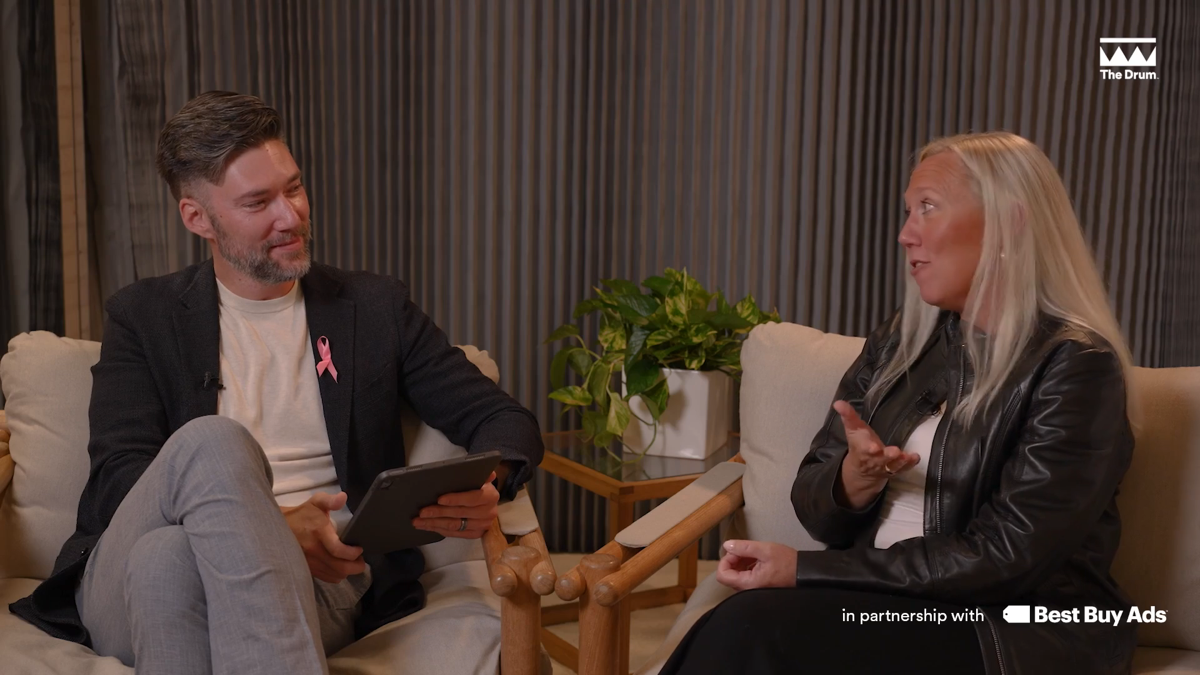
Image: The Drum / Best Buy Ads
Amy has a name for what Best Buy is doing. She calls it "flipping the funnel."
Big props to Amy, to Jeff and to The Drum. This is one of the clearest explanations of performance CTV I've heard from a retailer. Let's break down what she said, and then talk about how a brand that will never sit on a Best Buy shelf can do the same thing.
What Best Buy Actually Built
Here's the short version.
According to Best Buy Ads' own announcement, Best Buy CTV brings together "premium streaming inventory, audience intelligence and measurement capabilities" for technology and consumer electronics brands. It includes an expanded relationship with Amazon Fire TV on Insignia televisions and a bundle with LG and Roku that adds home-screen opportunities.
In the interview, Amy explains why they built it. "The industry has always begged us to make TV, CTV more performant," she told Jeff.
So Best Buy did what only a retailer can do. It took premium TV screens and tied them to what its customers actually buy.
Amy says the bundle across Roku, LG and Insignia TVs powered by Amazon Fire gets them to "about 90% scale." That's Best Buy's own number, so treat it as their claim, but the direction is clear. Advertisers don't have to stitch together one TV platform at a time.
Flipping the Funnel, in Plain English
The old funnel works top down.
Buy a big awareness campaign on TV. Hope some of those people remember you. Then pay search and retargeting to catch whoever wanders toward the bottom.
Best Buy is turning that upside down.
In Amy's words, it starts "at the top of the funnel with that audience intelligence and the commerce signals," and then asks, "how can we show that path on the consumer journey?"
In plain English: start with the buyer, not the broadcast. Use what you already know about who buys, when and why. Then put the TV ad in front of the households most likely to buy next, and follow the path all the way to the sale.
Best Buy's Chief Ads and Media Officer, Lisa Valentino, put it even more simply in the launch announcement. Best Buy Ads is "starting with real purchase behavior and working backward."
That's the whole game. Working backward from the sale.
The Laptop Line
This is my favorite part of the interview.
Amy points out that Best Buy's view of a customer isn't just their last search. It goes back years. In her words, "we know when that laptop buyer needs a refresh."
Read that line again, because it's the future of TV advertising in nine words.
A consumer electronics purchase is a long road. Amy says it herself: "A CE purchase takes a lot longer than, say, a CPG purchase." People research. They compare. They wait for the right moment.
TV is the medium that's there for that whole road. It's on the biggest screen in the house while the household is still deciding. Commerce data just tells you which households are on that road right now.
And Best Buy has a lot of data to work with. Amy says Best Buy has more than 100 million members, and that membership powers its identity graph.
They're Measuring It, Too
Here's what really earns the props.
Best Buy isn't stopping at targeting. Amy says they're rolling out multi-touch attribution, along with brand impact and incrementality measurement. Jeff joked that MTA is "kind of making a comeback." Amy called it a differentiator.
Whatever you call it, the point matters. A retailer with real sales data is saying CTV should be judged on the path to purchase, not just on reach.
We agree. We wrote a whole piece on why CTV stopped being a top-of-funnel-only channel, and another on giving CTV fair credit when buyers come in through search and direct. Best Buy just put its own name behind the same idea.
Amy also covered two more pieces that make it work. There's "a lot of demand for home screen inventory," and Best Buy CTV will have it with some partners. And Best Buy can build content with its in-house studio and its creators, so the ad fits the audience instead of just interrupting it.
Then the interview ends on the best line of the week. Jeff jokes that his Best Buy credit card history means he's definitely in the target audience. Amy laughs: "We are gonna get you, Jeff."
That's commerce media in one sentence.
The Honest Asterisk
Two things, in fairness.
First, this is a sponsored segment. The Drum produced it in partnership with Best Buy Ads, and The Drum labels it that way. That doesn't make it wrong. It just means the numbers, like that 90% scale, are Best Buy's numbers.
Second, the measurement is new. The MTA is rolling out now, so the proof is still coming. I'd love to see the results when they land.
Neither of those changes the big idea. One of the biggest names in consumer electronics is betting that CTV can drive sales, and that it can prove it.
You Don't Sell at Best Buy. Flip Yours Anyway.
Here's the part that matters for most of the brands we talk to.
Best Buy CTV is built for technology and consumer electronics brands. If you sell laptops and TVs, it's a great option.
But what if you're a regional HVAC company? A direct-to-consumer brand? A dental group, a law firm, a home builder, a credit union?
You can still flip the funnel. You just use your own data instead of a retailer's.
Start with your own buyers. Your order system and CRM already know who bought, what they bought, when and where. That's your commerce signal. It's yours, and nobody else has it.
Know your own refresh cycle. Best Buy knows when a laptop buyer is due. You know when a furnace, a roof, a lease, a membership or a cleaning is due. That's when your TV ad should show up.
Aim at qualified households, not cheap impressions. Use what your buyers look like to choose the homes and the areas that matter. A smaller, smarter audience beats a giant cheap one. We wrote about why qualified households beat cheap CPMs.
Put a pixel on your site. That's how you see the path. When a household sees your TV ad and later visits your site or buys, the pixel connects the two.
Measure against sales, not just clicks. Use holdouts and compare areas where the ad runs against areas where it doesn't. That's how you measure the alpha CTV actually creates instead of paying for sales that would have happened anyway.
Make the creative fit the moment. Best Buy has a studio and creators. You have a story only your brand can tell. Write the ad for the household that's about to buy, not for everyone.
Same funnel. Same flip. Your data.
The Final Take
Every so often, a big company says out loud what the smart money already knows.
Last week it was Best Buy. Amy McGovern stood up for CTV as a performance channel, explained it in plain English and backed it with a real plan for measurement. That's worth a round of applause, and a big thank-you to The Drum for putting it on camera.
The lesson is bigger than one retailer. TV is no longer just where you announce yourself. It's where you reach the household that's about to buy, on the biggest screen in the house, and then prove it worked.
Best Buy flipped its funnel with 10 years of customer history. You can flip yours with the buyers you already have.
That's how we build every campaign at CS & Co.: start from the sale and work backward. It's built into the CS Method™. Want to see what your own data could do on TV? Find out if CTV is a fit.
Cory Poccia
CEO, CS & Co. Marketing Studio™