General Marketing
Claim Your Business in ChatGPT (Here’s How), and Why It Matters for CTV
OpenAI just let businesses claim their profile in ChatGPT. Here's what's real, what's hype, the steps to claim yours, and why it matters if you run connected TV: CTV has no click, so viewers go search for you, and more of that search is moving into AI.
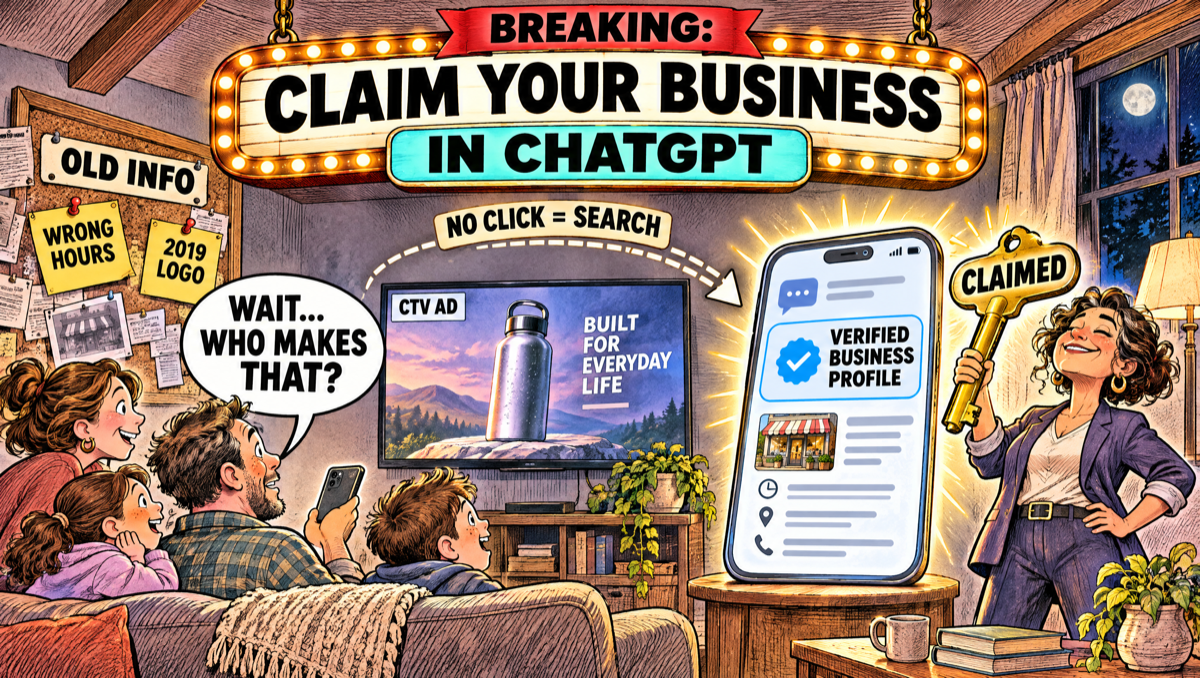
A viral post this week said ChatGPT just made a huge announcement for business owners. You can claim your business profile and see how often ChatGPT mentions you.
My first question was the one you're probably asking: is that true?
Mostly, yes. My second question: how do I get in?
So here's what's real, the exact steps, and why I think this matters more for connected TV advertisers than for almost anyone else.

What's Real and What's Hype
Real: OpenAI launched Businesses in ChatGPT in beta. Inside ChatGPT there's a new Business Hub. If you own a business or are authorized to represent it, you can claim your profile, verify it, keep your details accurate and see insights on how people find you in ChatGPT.
OpenAI doesn't list a charge for claiming, and you don't need an ads account. The paid part is advertising: businesses can sponsor their Business Agent as a ChatGPT ad.
Hype: the viral framing that this is the end of Google Business Profile. It isn't. This is a beta. Google isn't going anywhere. And OpenAI says it plainly in its own help article: claiming "doesn't guarantee increased visibility or give you direct control over ChatGPT's independent recommendations."
Claiming doesn't move you up. It makes sure that when ChatGPT does talk about you, it gets you right.
How to Claim Your Business in ChatGPT
Here are the steps, from OpenAI's help center and Tilio's walk-through of the flow:
- Sign in to ChatGPT as the business owner or an authorized representative, and open Business Hub from the sidebar.
- Find your business. Search by name and select your listing. No match? Add your business, if Business Hub offers you that option.
- Verify the claim. Pick a method: a code sent to your business email or business phone, a TXT record added to your website's DNS, or connecting your Shopify store.
- Wait for OpenAI's decision. OpenAI reviews the claim and emails you its decision, or asks for more information.
- Complete the identity check with Persona. Have a government-issued ID and your business registration details ready. Once it's approved, your profile gets the blue check.
- Update your profile. Edit your description, logo and policies, and connect a product feed if you sell products.
- Open Insights. You'll see mentions, profile views, website clicks and "discovery topics" (the common themes in conversations about you) for the last 28 days. It's aggregated. OpenAI doesn't share anyone's chats.
Two notes before you start:
- Local shops and restaurants can only claim an existing U.S. listing for now.
- Service businesses: when Tilio went through the flow on November 10, the "service" option was marked coming soon. If customers visit your office, the physical-location option includes offices.
Why This Matters for CTV
Here's the part nobody in that viral post talked about.
Connected TV has no click. Nobody taps their television. A viewer sees your ad, and then, as we've written before, "They pick up a phone. They search the brand."
For years, "search the brand" meant Google. More and more, it means asking an AI assistant. "Who makes that supplement from the commercial?" "Is that mattress company any good?" "Where do I buy it?"
I think the scale may tip between AI search and Google search. Not today, and maybe not all at once. But your CTV ad is already sending people to both.
So the brand your CTV ad builds has to be findable, and accurate, in ChatGPT too. If someone sees your spot on the big screen and then asks ChatGPT about you, the answer should have your real description, your real policies and your real website. Not a guess stitched together from old pages.
CTV drives the demand. Claiming your profile helps catch it.
There's a measurement upside, too. CTV's results already show up away from the screen, which is why last-click attribution misses so much of it. Business Hub adds one more place to look: mentions and website clicks from ChatGPT. Treat it as a directional signal, not proof. It's aggregated, it's a beta, and a blank number can just mean the data hasn't hit OpenAI's reporting threshold yet. The proof still comes from triangulating your CTV results and measuring incrementality against your own sales.
The Honest Asterisk
This launched as a beta. Steps, eligibility and what Insights shows can change. Claiming doesn't buy placement, and it won't fix a brand nobody's talking about. The work that gets you mentioned is the same work it's always been: a clear website, accurate details, and a reason for people to go looking for you.
The Final Take
Is the viral post true? Mostly. You can claim your business in ChatGPT, and it takes about seven steps.
Is it the end of Google? No.
But if you run connected TV, it's worth doing. Your ad doesn't get a click. It gets a search. And more of those searches are happening in AI. Make sure the answer is right.
That's how we think about every CTV plan at CS & Co.: the ad on the big screen, and everything that happens after. It's part of the CS Method™. Want to know if CTV fits your brand? See if we're a fit.
Cory Poccia
CEO, CS & Co. Marketing Studio™